Chinatown Singapore — a half-day food and heritage walk
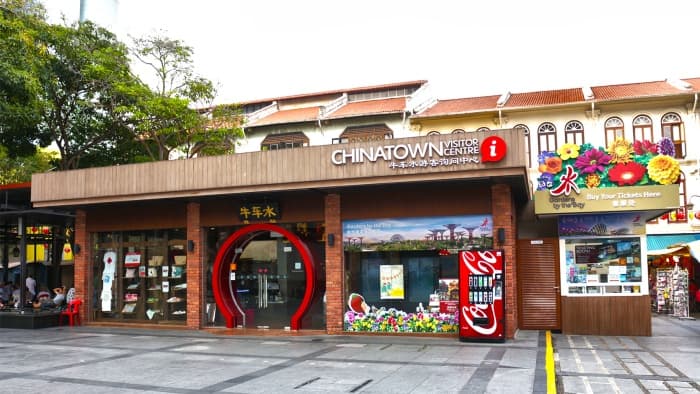
Chinatown is one of the most layered districts in Singapore. Three faiths sit within a few streets: the Buddha Tooth Relic Temple, Sri Mariamman Temple (the city's oldest Hindu temple), and Masjid Jamae Chulia (one of its oldest mosques). Two of Singapore's great hawker centres anchor it. And behind the souvenir-strip on Pagoda Street, the older Chinatown is still very much there.
What to see
Buddha Tooth Relic Temple
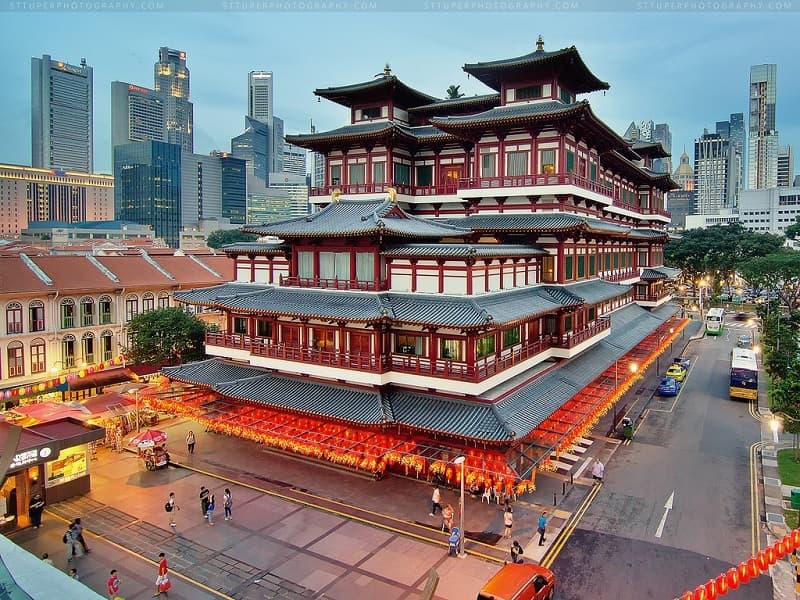
A four-storey temple in the Tang dynasty architectural style, completed in 2007, housing what's said to be a tooth relic of the Buddha. The relic is displayed on the fourth floor; the rooftop garden is a quieter contemplative space. Free to enter; modest dress respected.
Sri Mariamman Temple
Singapore's oldest Hindu temple, founded in 1827, with a richly carved gopuram (entrance tower) of figures from Hindu mythology. A National Monument. The fact that the country's oldest Hindu temple sits in Chinatown tells you something about how communities were threaded through this part of Singapore from the start.
Masjid Jamae Chulia
One of Singapore's oldest mosques, dating from 1826. Indo-Islamic in style with two distinctive minarets. A National Monument and a quietly powerful illustration of how Muslim communities were embedded in Chinatown's history. Visitor entrance outside prayer times; modest dress required.
Chinatown Heritage Centre
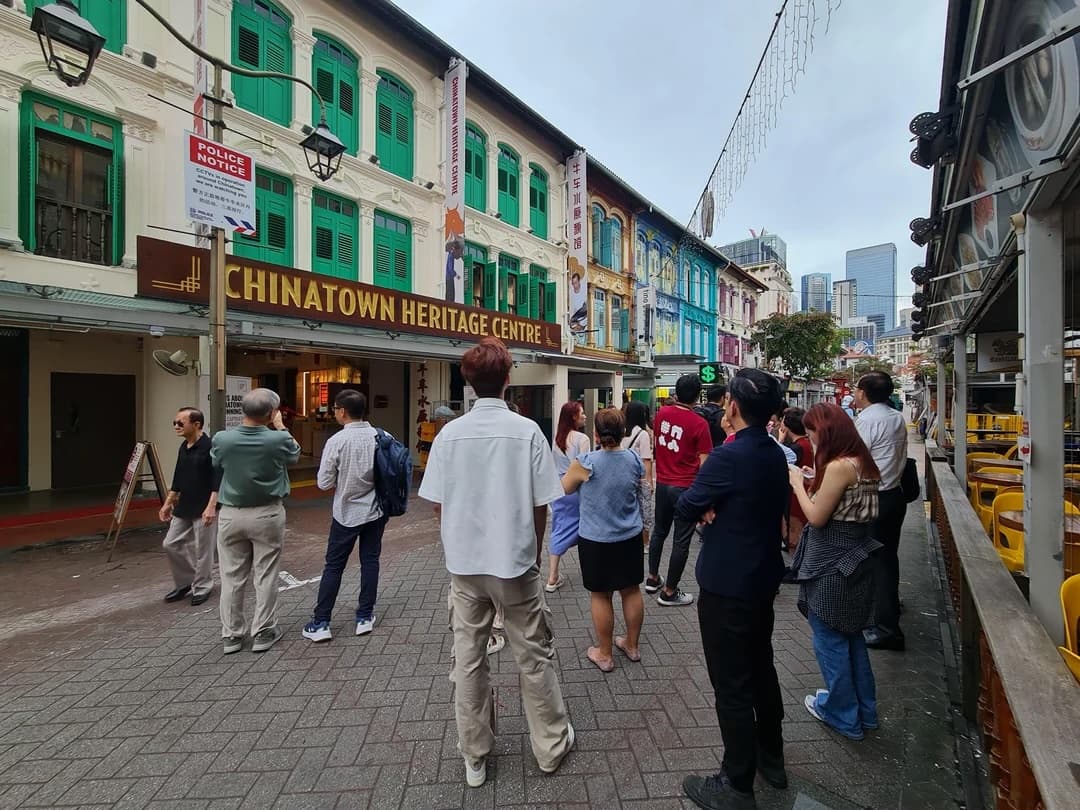
Three restored shophouses on Pagoda Street, recreating the cramped, layered living conditions of early Chinese migrants. The bunk-bed reconstruction and the kitchen exhibit are quietly devastating; the museum is the best single way to understand what Chinatown actually was before it became a heritage district.
What to eat
Two hawker centres anchor the district and both are worth their reputations.
Maxwell Food Centre
Smaller, more famous, and the most-photographed hawker venue in central Singapore. Tian Tian Hainanese Chicken Rice (the stall that helped put Singaporean chicken rice on the global map) is here. So is a wider range of Chinese, Malay, and Indian options. Halal-certified stalls are signposted with the green MUIS logo.
Chinatown Complex Food Centre
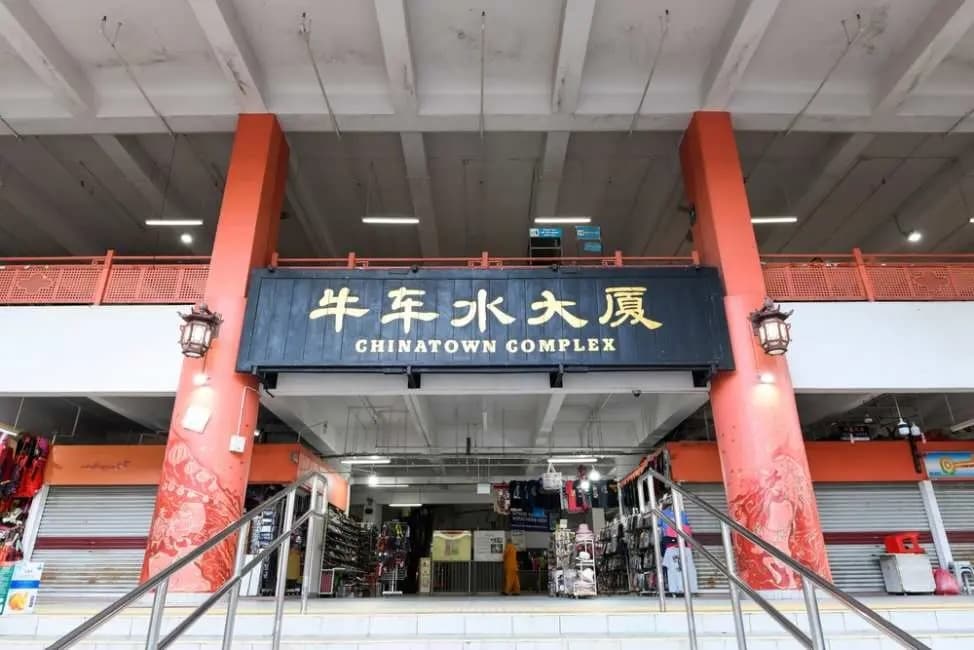
Larger, denser, and where Singaporeans eat. Hawker Chan (the Michelin-starred soya sauce chicken rice) is here. So are dozens of stalls Maxwell doesn't have room for. The pace is faster and the seating is harder to find at lunchtime; come in the off-peak window if you want a relaxed meal.
Halal note: both hawker centres have halal-certified stalls but they're in the minority. Look for the green MUIS logo at the stall front. For halal-only meals, Kampong Glam (a 10-minute ride away) has a far higher density.
How to spend a half-day in Chinatown
- 9:00am. Start at Chinatown MRT, Pagoda Street and the Chinatown Heritage Centre.
- 10:30am. Sri Mariamman Temple (South Bridge Road).
- 11:00am. Masjid Jamae Chulia, a few doors down.
- 11:30am. Buddha Tooth Relic Temple, with time on the rooftop garden.
- 12:30pm. Early lunch at Maxwell Food Centre (or Chinatown Complex if you want the larger range).
- 2:00pm. Wander the back lanes (Smith Street, Trengganu Street, Temple Street) for the older Chinatown that survives behind the main strip.
Half a day covers the highlights. A full day lets you add Tanjong Pagar (just south, with its restored shophouse-and-bar district) or Telok Ayer (just east, with Thian Hock Keng Temple and the heritage of the Hokkien community that settled by the original waterfront).
Frequently asked questions
- Where is Chinatown Singapore?
- Chinatown sits in central-south Singapore, just north of the Outram and Tanjong Pagar districts. The historic boundaries run roughly from South Bridge Road and New Bridge Road through to Cantonment Road. The closest MRT stations are Chinatown (Downtown / North-East lines) and Outram Park.
- What is Chinatown known for?
- Chinatown is best known for the Buddha Tooth Relic Temple, the historic Sri Mariamman Temple (Singapore's oldest Hindu temple), Masjid Jamae Chulia (a National Monument and one of Singapore's oldest mosques), the Chinatown Heritage Centre, and the Maxwell and Chinatown Complex hawker centres, two of the most renowned hawker venues in the city.
- Is there halal food in Chinatown Singapore?
- Yes, though less concentrated than in Kampong Glam. Maxwell Food Centre and Chinatown Complex both have halal-certified stalls clearly signposted with the green MUIS logo. The presence of Masjid Jamae Chulia means there's a small but consistent halal food cluster around South Bridge Road.
- How do you get to Chinatown by MRT?
- Chinatown MRT (Downtown and North-East lines) is the most direct station. You'll exit straight into the heart of the heritage district. Outram Park (East-West, North-East, Thomson-East Coast lines) is also walkable and useful if you want to start at the Tanjong Pagar end.
- Is Singapore Chinatown worth visiting?
- Yes. Chinatown is one of the most layered heritage districts in Singapore. Three faiths sit within a few streets (Buddhist, Hindu, Muslim), the hawker food at Maxwell is among the best in the city, and the back lanes behind the souvenir-strip on Pagoda Street still hold the older Chinatown that doesn't make it onto Klook listings.
See Chinatown with a local guide
Heritage walks and hawker food trails led by STB-licensed guides who know which stalls are worth queuing for and which lanes still hold the older Chinatown.