Muslim-friendly Singapore — a complete guide for travellers
Singapore is one of Southeast Asia's most accessible destinations for Muslim travellers. Halal-certified food is widespread, mosques sit comfortably in the heritage fabric of the city, and prayer facilities are available almost everywhere: airport, malls, hawker centres, attractions. This guide covers the practical things worth knowing before you visit.
Halal food in Singapore
Singapore's halal certification is administered by the Majlis Ugama Islam Singapura (MUIS), one of the most respected halal authorities in the world. Look for the green MUIS halal logo at the entrance or counter of any food outlet. It's the verified standard, and Singaporeans across faiths recognise it as authoritative.
Practically speaking, you won't go hungry. The major hawker centres (Lau Pa Sat, Maxwell, Old Airport Road, Newton, Tekka, Geylang Serai Market, and many others) all have multiple MUIS-certified stalls clearly signposted. Major shopping mall food courts and most international fast-food chains are halal-certified. Most casual sit-down restaurants in Muslim-majority neighbourhoods (Kampong Glam, Geylang Serai) are halal by default.
Where to be careful: Chinese dim-sum and seafood restaurants are typically not halal, even when the food might appear so. When in doubt, ask staff directly. They're used to the question and will tell you straight.
Historic mosques worth visiting
Singapore has more than 70 mosques. A handful are nationally significant heritage sites; these are the ones most worth setting time aside for, whether you're Muslim or not. All welcome respectful visitors outside of prayer times, and modest dress is expected.
Masjid Sultan
The golden-domed mosque at the heart of Kampong Glam, gazetted as a National Monument. Built in 1824 and rebuilt in 1932, it sits at the end of Bussorah Street and dominates the skyline of the Muslim quarter. Visitor entrance is around the side; loaner robes are available at the door.
Masjid Hajjah Fatimah
A leaning minaret, an Anglo-Indian colonial style, and a quiet courtyard. This 1846 mosque on Beach Road was named after a wealthy Malaccan-born merchant who funded its construction. It's a National Monument and one of the most architecturally distinctive mosques in the city.
Masjid Abdul Gaffoor
A South-Indian-Indo-Saracenic mosque in Little India, with an ornate sundial entrance featuring 25 rays inscribed with the names of the prophets. Built in 1907 and one of the more visually striking mosques on the heritage trail.
Masjid Jamae Chulia
One of Singapore's oldest mosques, dating from 1826, sitting in the middle of Chinatown. The architecture is Indo-Islamic with two distinctive minarets, and it's a National Monument. The proximity of mosque, Hindu temple, and Buddhist temple within a few blocks is a quietly powerful illustration of how Singapore's communities live in close proximity.
Prayer times and facilities
Prayer times in Singapore follow the standard five daily times (Fajr, Zuhr, Asr, Maghrib, Isha). Times are published daily by MUIS and are also available through apps like Muslim Pro, Halal Trip, and the MUIS app itself.
Where to find prayer rooms: Changi Airport (every terminal), major shopping malls including ION Orchard, Marina Bay Sands, VivoCity, Jewel Changi, Suntec City, and most heartland malls. Many hawker centres have washrooms suitable for ablution. For visitors who want to time their day around prayer, we typically schedule tours so they pass mosques or quiet prayer-friendly stops at relevant times.
Friday prayers: Most working Muslim Singaporeans attend Friday Jumu'ah prayer between roughly 12:30 and 2:00pm. Mosques get crowded; visitor-style sightseeing is best timed outside this window.
Halal-friendly neighbourhoods
Three neighbourhoods carry the most concentrated Muslim heritage and the highest density of halal food in the city. Worth knowing where they are and what each does best.
Kampong Glam
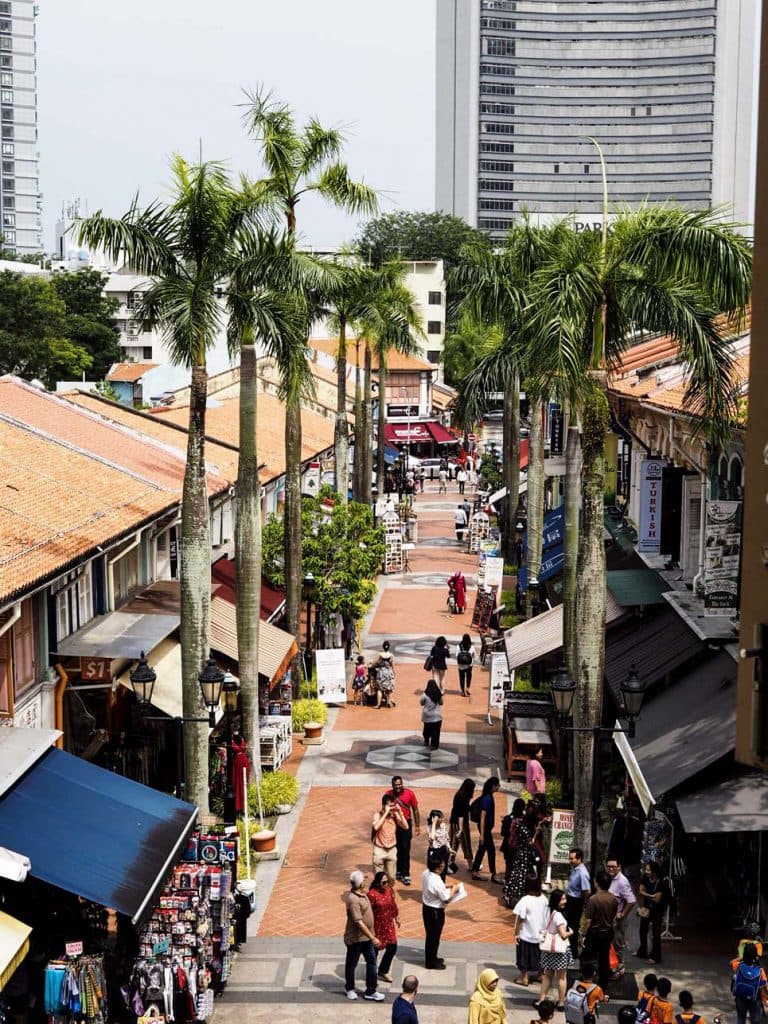
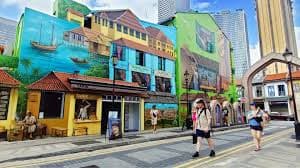
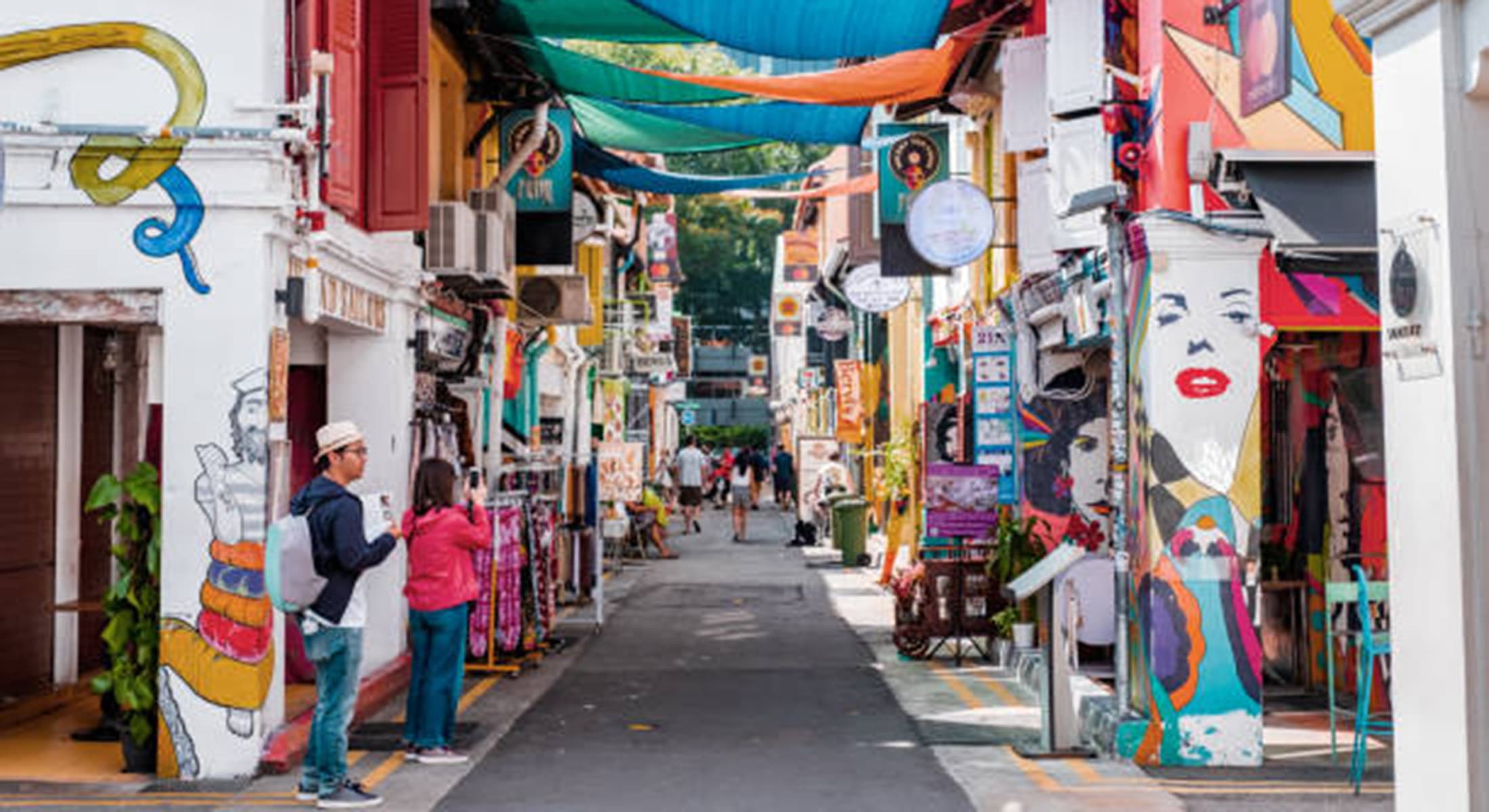
The historic Malay-Muslim quarter, anchored by Masjid Sultan and stretching along Arab Street, Bussorah Street, and Haji Lane. The food density is extraordinary: nasi padang, biryani, murtabak, kebabs, Turkish, Lebanese, modern fusion. Almost every restaurant on the main streets is halal-certified or halal-conscious; ask if in doubt.
Geylang Serai
The cultural centre of the Malay community, with the Geylang Serai Market (Pasar Geylang Serai) at its heart. Traditional Malay foods (nasi lemak, mee rebus, kueh) are at their most authentic here. During Ramadan, the Geylang Serai Bazaar transforms the area into a major street-food festival in the lead-up to Hari Raya.
Joo Chiat & Katong
A historic Peranakan and Malay neighbourhood in the east. Pastel shophouses, halal Peranakan kueh, and a quieter, more residential pace than Kampong Glam. Worth pairing with a stop at Joo Chiat Complex for traditional Malay craftwork and dressmaking.
Curated halal-friendly tours
We design every Merhaba Destinations tour to be halal-friendly by default. Our guides are STB-licensed, our food stops are halal-certified or halal-friendly, and our scheduling is prayer-time-aware. Three tours specifically built around the city's Muslim heritage:
Jaulah Masjid (Mosque Visits)
Heritage mosque tours led by a guide who treats the architecture, the history, and the etiquette equally seriously.
See Jaulah Masjid toursFood Tours
Halal hawker trails in Kampong Glam, Geylang Serai, Joo Chiat, and neighbourhood favourites that don't show up on the marketplace listings.
See food toursCity Tours
Heritage walks across Kampong Glam, Chinatown, the Singapore River, and Marina Bay, designed around halal food stops and prayer-time-aware scheduling.
See city toursFrequently asked questions
- Is Singapore Muslim-friendly?
- Yes. Singapore is one of the most Muslim-friendly destinations in Southeast Asia. About 15% of the population is Muslim, halal-certified food is widely available across hawker centres, restaurants, and fast-food chains, and there are over 70 mosques across the island. Prayer rooms are common in shopping malls, the airport, and major attractions.
- Is Singapore food halal?
- Singapore has one of the most reliable halal certification systems in the world, administered by Majlis Ugama Islam Singapura (MUIS). Halal-certified outlets display a clear MUIS halal logo. Most major hawker centres, malls, and tourist areas have a wide selection of halal-certified options, and most international fast-food chains in Singapore are halal-certified.
- Can non-Muslims visit mosques in Singapore?
- Yes. Singapore's main heritage mosques (Masjid Sultan, Masjid Hajjah Fatimah, Masjid Abdul Gaffoor, and Masjid Jamae Chulia) welcome respectful visitors of any faith outside of prayer times. Modest clothing is required (covering shoulders and knees; women may also need to cover their hair). Some mosques provide loaner robes at the entrance.
- Where can I find prayer rooms in Singapore?
- Prayer rooms are widely available. Changi Airport has prayer rooms in every terminal. Major shopping malls (ION Orchard, Marina Bay Sands, VivoCity, Jewel Changi) have dedicated prayer spaces. Most hawker centres have washrooms suitable for ablution. The MUIS website and the Halal Trip app maintain detailed prayer-room directories.
- What are the best halal food areas in Singapore?
- Kampong Glam (around Masjid Sultan and Arab Street) is the historic Muslim heart of Singapore with the highest density of halal-certified eateries. Geylang Serai is the centre of the Malay community with traditional Malay food and the major Hari Raya bazaar. Joo Chiat and Katong have a strong Peranakan and Malay food heritage. Most hawker centres across the island have multiple halal stalls clearly labelled with MUIS certification.
- When is Ramadan in Singapore and what's open?
- Ramadan dates shift each year following the Islamic lunar calendar. During Ramadan, halal restaurants typically remain open through the day; many extend hours for iftar (breaking fast) and sahur (pre-dawn meal). The Geylang Serai Ramadan Bazaar runs each evening in the lead-up to Hari Raya, a major cultural event with food stalls, family activities, and a festive atmosphere.
- What should I wear when visiting mosques in Singapore?
- Modest clothing is the standard. Shoulders and knees should be covered. Women may also need to cover their hair (some mosques provide scarves at the entrance). Shoes are removed before entering the prayer hall. Avoid visiting during the five daily prayer times if you're a non-Muslim visitor; staff will direct you to a respectful viewing area at other times.
Plan a halal-friendly Singapore trip
Browse our curated tours or get in touch about a custom program. STB-licensed local guides, halal-friendly across every itinerary, multilingual delivery.